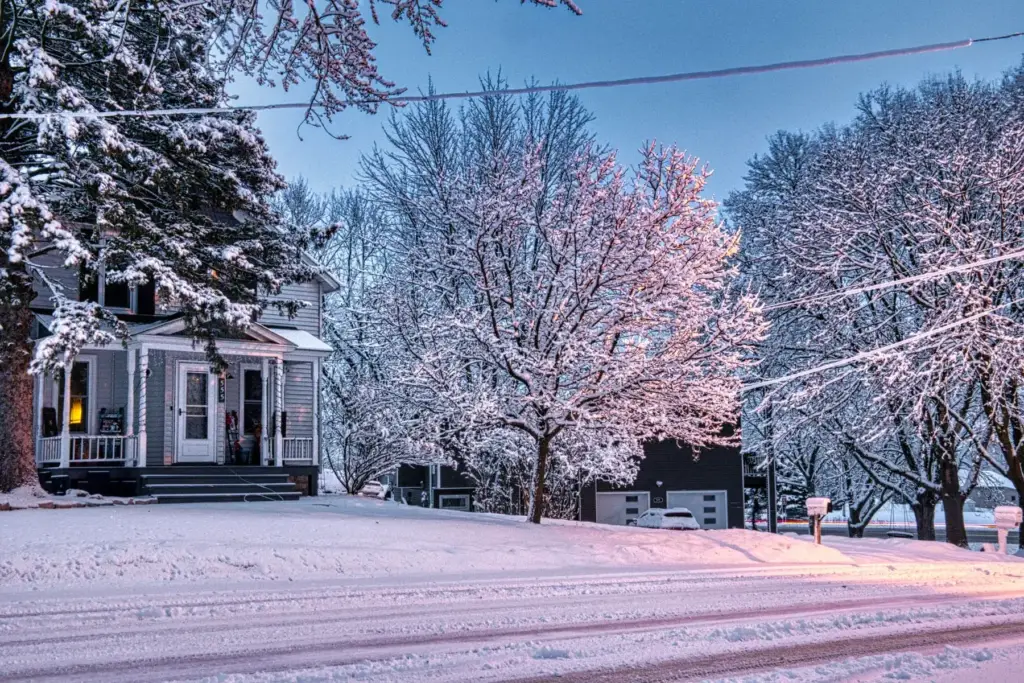
Syracuse is regularly named the snowiest large city in the United States, and the number that matters to your trees is not the total. It is the water content. Lake effect snow off Lake Ontario is heavy, wet and it arrives in bands that can drop a foot in an afternoon on one side of town while the other side gets flurries. That kind of snow sticks to every branch, builds up, and then the wind shifts. That is when the phone starts ringing at our 24/7 emergency line, because lake effect storms find every weak limb in the city.
After a decade of working storms across Syracuse, Cicero and the rest of Onondaga County, the failures we see are predictable. This article explains why they happen, which trees are most at risk in Central New York, and what you can do in the fall so your trees are still standing in March.
How lake effect storms actually break a tree
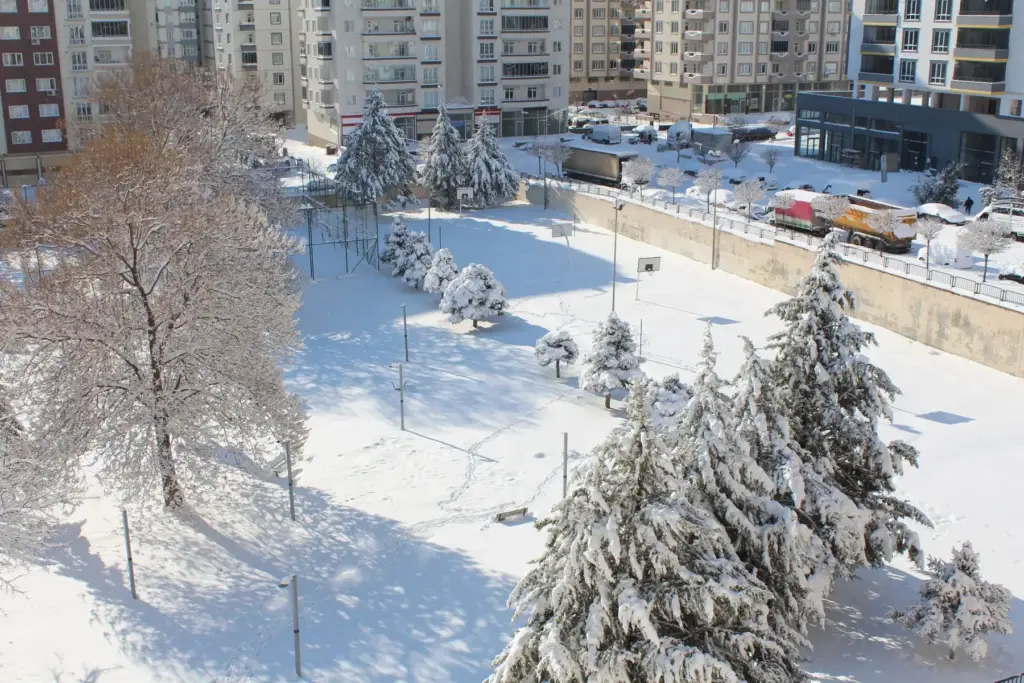
A branch is a lever. Snow that lands on it adds weight along its whole length, and the further from the trunk the weight sits, the more force it puts on the union where the branch meets the stem. Dry powder blows off. Wet snow at 30 degrees does not. It compacts, absorbs more snow on top, and if it rains or the temperature hovers around freezing it turns to ice, which can be ten times heavier than the same depth of powder.
Three things then decide whether the branch holds:
- The species. Fast growing trees with soft wood and wide, spreading crowns fail first. In Syracuse that means silver maples, Norway maples, Bradford pears, poplars and willows. Slow growing oaks and hickories hold far more load.
- The structure. Two leaders of equal size joined in a tight V, called a codominant union, is the single most common failure point we see. Bark gets trapped in the crotch as the tree grows and the two stems are held together by very little real wood. Snow load pushes them apart.
- The crown density. A dense, unpruned crown catches more snow than an open one. It also catches more wind. Thinning is not about making the tree smaller, it is about letting the weather pass through.
Evergreens have their own problem. Norway spruce, blue spruce and white pine hold their needles all winter, so they collect snow that a bare maple would not. A spruce planted too close to the house in the sixties is now 60 feet tall, top heavy and one ice storm away from the roof. We see this on every street in Liverpool and Camillus.
The Syracuse storms that taught us this
Anyone who lived here in 1998 remembers the Labor Day storm. A derecho came through with winds over 100 miles an hour, and the city lost tens of thousands of trees in a single night. Streets in Eastwood and the University neighborhood were blocked for days. That storm was wind, not snow, but the trees that failed were the same ones that fail every winter: big silver maples with codominant leaders, and anything with internal decay that nobody had looked at.
The ice storms are quieter and just as expensive. A quarter inch of ice on a mature maple adds hundreds of pounds. The March storms that come with rain first and then a hard freeze are the ones that bring us the most calls for trees on garages, because the ice forms after the snow has already loaded the crown.
The National Weather Service winter safety page is worth a read for the human side of storm preparation. For the tree side, keep reading.
Which trees in your yard are at risk
Walk the property in October, once the leaves are mostly down and you can see the structure. Look for:
- Tight V unions. Two big stems meeting in a narrow angle, especially with a seam of bark running down into the crotch. On maples this is the classic failure.
- Deadwood. Dead branches with no bark or with fungus on them. They are already weak and they come down under the first load.
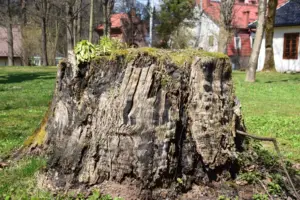
- Cracks and cavities. A vertical crack in the trunk, a hollow you can put your arm in, or mushrooms growing from the base all mean internal decay. The tree may look full and healthy from the outside.
- Lean. A tree that has always leaned is usually fine. A tree that started leaning this year, with soil heaving on one side of the base, is not.
- Targets. What is under the tree? A branch over the lawn is a cleanup job. The same branch over the bedroom, the driveway or the service drop is an emergency.
Ash trees deserve a special mention. Emerald ash borer has killed or is killing almost every untreated ash in Onondaga County, and dead ash becomes brittle fast. An ash that died two summers ago will shed limbs in a storm that a healthy tree would shrug off. If you have a dead ash within reach of anything you care about, that is a removal before winter, not after.
Four things to do before December
1. Have the crown thinned and deadwooded
This is the single most effective thing you can do for a mature maple. A proper crown cleaning removes dead, dying, crossing and rubbing branches. A light thinning, taking out no more than 15 to 20 percent of the live crown, opens the canopy so snow and wind pass through instead of loading it. The tree looks like itself, just lighter. Our trimming and pruning page explains what a proper cut looks like and why we never top trees.
2. Reduce or cable weak unions
A codominant union does not always mean the tree has to go. On a valuable tree, an arborist can reduce the weight on one leader with reduction cuts, or install a cable high in the crown that lets the two stems share load. Cabling done properly is invisible from the ground and adds decades to a tree. Cabling done with a chain and a turnbuckle from the hardware store girdles the tree and makes things worse.
3. Get clearance from the house and the lines
Any branch that is touching or within a few feet of the roof will be on the roof by February. Raising the crown over the house and driveway is a quick job in the fall and a miserable one in January. Branches near the service drop, the wire from the pole to your house, can be cleared by a tree crew. Anything touching the primary lines on the pole is National Grid’s job, and you should call them, not us, for that.
4. Take down what is already failing
Dead ash, spruce with a dead top, silver maples with a split you can see daylight through. These are not trees that will get better. Removing them on a calm day in November costs a fraction of removing them off a garage in a snowstorm, and the crew is not working at height on ice. The International Society of Arboriculture guide to recognizing tree hazards is a good primer if you want to understand what an arborist is looking for.
What to do during the storm
Do not knock snow off branches with a broom or a rake. It is tempting, and it snaps frozen limbs that would have survived the load. Do not shake small trees. If a branch is hanging, stay out from under it. If a tree is on the house, stay out of the rooms below it. If anything is touching a wire, treat the whole area as live and call the utility first.
Then call us. The emergency line is answered 24/7 and we triage the same way every storm: life safety and structures first, then blocked access, then cleanup. We photograph everything for your insurance claim before we touch it.
After the storm: what recovers and what does not
A tree that lost a few small limbs will be fine. Clean up the breaks with proper cuts back to the branch collar so they seal, and leave it alone. A tree that lost a major leader or more than a third of its crown is in trouble. It will push out weak sprouts along the wound, it is now unbalanced, and the exposed wood invites decay. Sometimes it can be reduced and saved. Often the honest answer is that it should come down and the stump ground so you can plant something better suited to the spot. That decision is exactly what a free on site estimate is for, and if the tree can be saved we will tell you.
Plant for the next fifty winters
If you are replacing a tree, pick one that belongs in Syracuse. Sugar maple, red oak, swamp white oak, Kentucky coffeetree, honeylocust and American hornbeam all handle our winters and our clay soils. Give them room from the house. Prune them structurally in their first ten years so they never develop the codominant unions that break their parents. Cornell Cooperative Extension of Onondaga County publishes regional planting advice that is worth a look.
Trees are the reason Syracuse neighborhoods look the way they do. With a fall inspection, a proper prune every few years and a willingness to remove the ones that are truly done, most of them will stand through a lot more winters. If you would like ours to take a look, request a free estimate and we will walk the yard with you before the first band comes off the lake.